Posts

Showing posts with the label Cost Efficiency

Top Warehouse KPIs to Succeed in 2020
Image
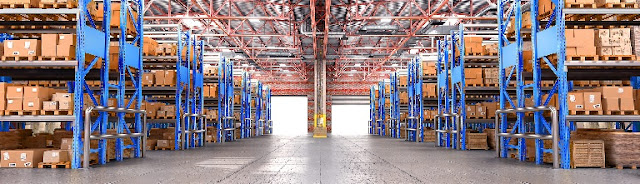
Key performance indicators (KPIs) provide an invaluable way to judge the efficacy of operations, determine opportunities for improvement, improve customer experiences , and better manage supply chain functions, including warehouse management.  Supply chain leaders that wish to remain proactive to risks of disruption and improve operations through 2020 and beyond need to understand the top warehouse KPIs and how they can mean the difference between success and failure. This blog is the first in a two-part series where Veridian, a supply chain technology implementation company, will share the top 19 warehouse KPIs that track performance in the following areas: 1. Internal Operations 2. Staffing 3. Suppliers 4. Customers Let’s cover the top 10 warehouse KPIs for supply chain leaders and warehouse managers to succeed in 2020. (1) Internal Operations—Shrinkage of Inventory: Inventory shrinkage refers to the amount of inventory listed in the accounting records, but such inventory...

Air

Image
Air transportation is being considered by increasing numbers of shippers for regular service, even though air freight rates exceed those of trucking by more than two times and those of rail by more than 16 times. The appeal for air transportation is its unmatched origin to destination speed, especially over long distances. Air service dependability and availability can be rated as good under normal operating conditions. Delivery time variability is low in absolute magnitude, even though air service is quite sensitive to mechanical breakdown, whether conditions and traffic congestions. Variability when compare with average delivery times, can rank air as one of the least reliable modes. The capability of air has been greatly constrained by the physical dimensions of the cargo space in the aircraft and the aircraft's lifting capacity. This is becoming less of a constraint, however, as larger aircraft are put into service. For example, jumbo airplanes such as Boeing 747 and L...

Service Choice and Characteristics

Image
The transportation user has a wide range of services at his or her disposal that revolve around the five basic modes: water, rail, truck, air and pipeline. A transport service is a set of performance characteristics purchased at a given price and the variety of transport service is almost limitless. The five modes may be used in combination e.g. piggyback or container movement; transportation agencies, shippers' association and brokers may be used to facilitate these services; small shipment carriers like, UPS or FEDEX may be used for their efficiency in handling small packages or a single transportation mode may be used exclusively. From among these service choices, the user selects a service or combination of services that provides the best balance between the quality of service offered and the cost of that service. The task of service-choice selection is not as forbidding as it first appears because circumstances surrounding a particular shipping situation often reduce the c...

Transport Fundamentals

Image
Transportation usually represents the most important single element in logistics cost for most firms. Freight movement has been observed to absorb between one-third and two-thirds of total logistics costs. Thus, the logistician needs a good understanding of transportation matters. Although a comprehensive discussion of transportation is not possible within the scope of this text, this subject highlights what is essential to the logistician for his or her managerial purpose. The focus is on the facilities and services that make up the transportation system and on the rates [costs] and performance of various transport service that a manager might select. Spefcifically, we wish to examine the characteristics of the transportation service alternatives that lead to optimal performance. It is performance that the user buys from the transportation service. Importance of an Effective Transportation System One needs only to contrast the economies of  developed nation with those of a...

Vendor-Managed Inventory (VMI)

When retailers managed inventory, one of the methods for inventory control was to use some form of a trigger-point method replenishment program. That is, when an item in stock is depleted to the level of the trigger point quantity, a purchase order is placed on a vendor to replenish the item. In such systems, retailers make their own forecast and inventory control rules. Alternately, retailers will replenish on a fixed cycle i.e. once a week basis and order an amount to fill designated shelf space for an item. According to the International Mass Retail Association, over 60 percent of hard goods and almost 40 percent of soft goods are under replenishment programs managed by retailers. Although retailer-managed replenishment programs are expected to continue, there are also expected to be a substantial growth in vendor-managed inventory (VMI) that is continuous replenishment. With electronic data interchange (EDI) and point of sale data, vendors can be as aware of what is on the ret...

Nine Ways - Warehousing Adds Value

Outdated philosophies may prevent us from recognizing and integrating some of the new ways the warehouse or distribution center (DC) can add real value to our operations. Let’s talk about moving dinosaur thinking into the 21st century. Let’s talk about the evolution of warehousing as a means of adding value to your organization. In another “era,” when I first started out, there were basically only four types of warehousing that were thought to benefit an organization: Storage Warehouse: The use of a facility to stockpile inventory for outbound shipment in a make-to-stock plant environment or where MRO items are held for consumption, repair, and service of plant facilities and equipment. The intention is to have long-term storage. Production Warehouse: The utilization of a facility to hold materials and components for inventory prior to their need in processing, production, or manufacturing. The goal is to level demand. Order Fulfillment DC: A facility that holds inventory to meet cust...

Modernising Legacy Supply Chain Systems

The pace of change in manufacturing, distribution and retailing has been increasing rapidly in order to support international expansion, while in the face of a wide variety of external challenges. Uncertain economic conditions are presenting CIOs with an almost impossible task: How to transform IT in order to meet the business’s constantly changing and evolving needs while staying within budget, ensuring projects are delivered successfully, and proving new systems have a lower TCO for the ongoing business. This challenge is made more complicated because so many companies are tied into big investments in legacy systems. These behemoths resist change and are so ingrained in the business that the prospect of modernising or replacing them can be daunting from an implementation effort standpoint and challenging from a cost justification perspective. There are however a number of compelling reasons why a business should consider upgrading its legacy systems. The first is the increasing cost...

What is Outsourcing?

Image
The contracting of management and/or execution of a business or operational function to an external third party contractor or sub-contractor. Outsourcing can refer to either a product or service but most commonly refers to services. Outsourcing has been a feature of the business world for hundreds of years and it is simply a typical modernised term for "contracting out". Note that the business or operational function can be outsourced to either a domestic or foreign third party contractor. The key factor here is that the service be performed by an external third party contractor, not simply by a department or division of the same company. Benefits of outsourcing: the acquisition of specialized services required on a limited or temporary basis; quick solution to a temporary overload work or task; ability to concentrate on the organization's focus on its core competencies; potential to save money. Almost any business or operational function can be outsourced,...